March 11, 2012

Goodbye, Microcephaly?

Yes, that is Bertrand taking his bottle, one-handed like a boss.


I needed some good news this weekend, and it came from the best possible source: Bertrand. His head appears to have passed the 15th percentile!

A little over 2 years ago, Bertrand was diagnosed with microcephaly, which literally means small head. His head was measuring in the 2nd percentile.
Since head growth slows down as kids get older, most of Bertrand's doctors had stopped measuring his head circumference. At his past several neurology appointments, I've had to request that they take the measurement.

As a result, since this past summer, I've been tracking his head circumference. While his doctors haven't commented on the trend, I think it's a significant one. I will take any excuse to celebrate my boy! :)

March 8, 2012

Building Skills for Life

Another photo of Bertrand holding his own bottle. It never gets old!
And, yes, he is man enough to borrow his sister's bedsheets when his are in the wash. ;)

This is an entry for our bloggy friend, Barbara's, blog carnival based on the American Occupational Therapy Association's (AOTA) 2012 theme, Building Skills for Life.

The first 3 years of Bertrand's life, we were so desperate to do everything and anything to help our son that we didn't take time to prioritize our activities with him. The birth of our daughter, Victoria, harkened a paradigm shift. We could no longer waste time doing therapy for therapy's sake. Therapy had to provide a measurable benefit for Bertrand.

We shifted our focus to building skills for life. We had to evaluate, cut back, and in very few cases add therapy. To everyone's astonishment, Bertrand is flourishing! It's obvious in hindsight, but we learned that doing a few things intensively and consistently yields better results than doing many things sporadically.

The October and December intensive therapy sessions at Now I Can, while valuable in and of themselves, forced us to consider what and how we provided for Bertrand at home. (He has me wrapped around his little finger, so Mrs-Tough-Mommy-Therapist, I am not.) We hired two WONDERFUL therapeutic aides for Bertrand--Miss A and Miss V--to implement the significant at-home exercise programs which was prescribed. Together we established a few goals.

Goal number one: sitting safely. Bertrand could sit upright when placed on the floor, but because of his movement disorder, he would fall over and hurt himself. Now, he keeps one arm down, braced on the floor, or reaches down to brace himself. He rarely falls! This was a continuation of his work with Now I Can.

Goal number two: self-feeding. Bertrand was still being fed soft foods and a baby bottle for most meals. So for every meal, even though it would be faster or easier to do it for him, we helped Bertrand hold his own bottle. And now? He can hold his own bottle for most of the meal!

In this same vein, he is made to hold his spoon to feed himself his applesauce snack in the afternoons and we've varied the textures in his dinner--expanding his palate. None of this goes smoothly. It is messy. At the start, he is unhappy, BUT he does it. And he is getting better! Every. Single. Day. You can see his growing pride and initiative reflected in his beautiful smiles!

Other broad, lofty goals include: mobility (walking, power wheelchair), potty training, and communication (speaking, reading). WHY NOT? Hopefully, we've got some time with him. Nothing ventured, nothing gained. Yes, these are skills for Bertrand's life, but they are also skills for our family life. The more interactive and happier Bertrand becomes, the happier we ALL are. :)

March 5, 2012

Power Wheelchair Evaluation


Bertrand's power wheelchair evaluation today was interesting. He used a chair with proximity sensors on the tray. It was like a giant switch toy. He did well for being sick, hungry, and sleepy. However, before the Physical Therapist (who has never worked with Bertrand before) can give his recommendation in favor of a power wheelchair, Bertrand will need a lot of practice: a suggested minimum of 3 times per week.

We'll go back up to Shriners on Thursday to work with the chair. And, I hope that Bertrand may be able to work with the mobility specialist at his school. Going up to Shriners with Victoria is very difficult--she kept trying to play with other children doing therapy and/or distracting me. However, Bertrand's beautiful smiles whenever he zoomed (like his new hero Lighting McQueen) cemented my resolve to give him this chance.

March 4, 2012

First Time Skiing & Sledding

DSC_0011
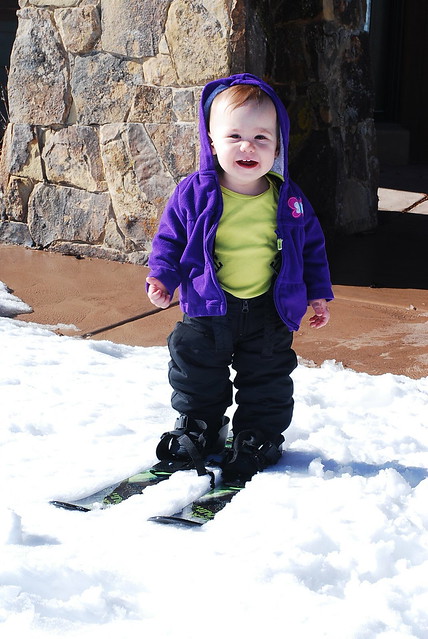
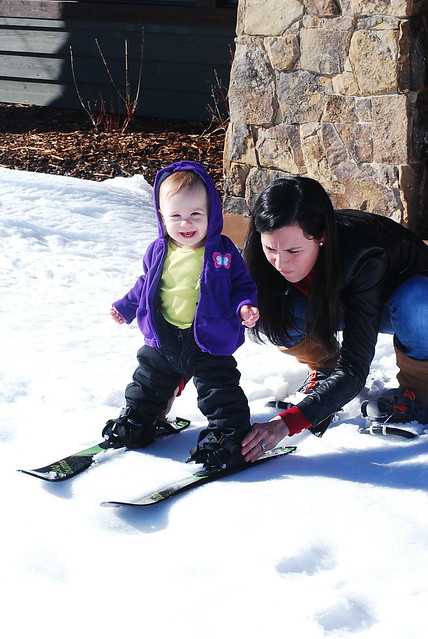
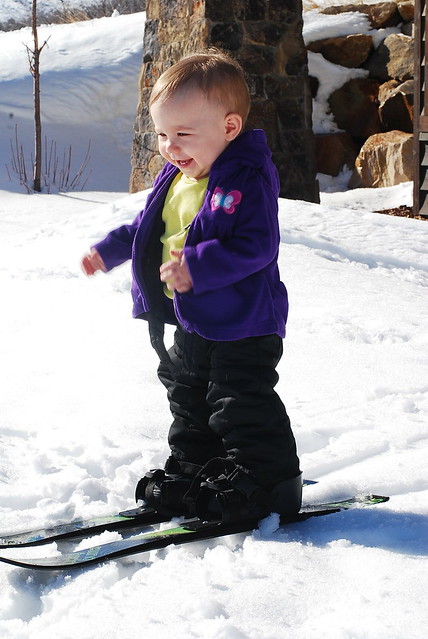
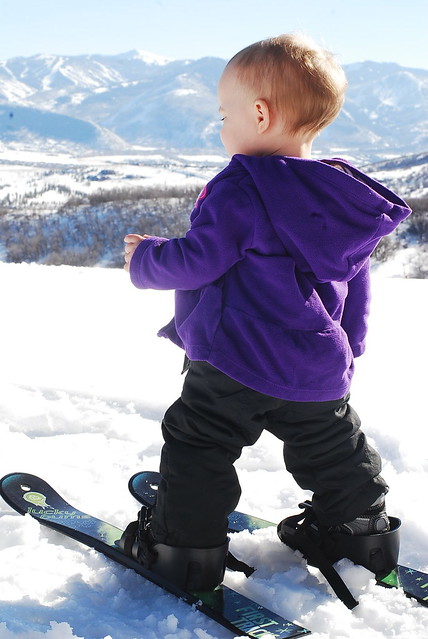
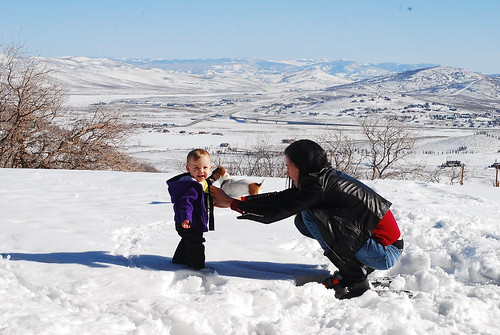
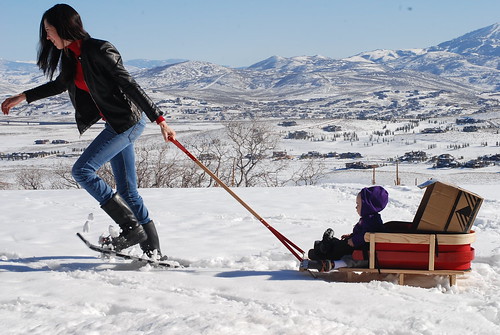
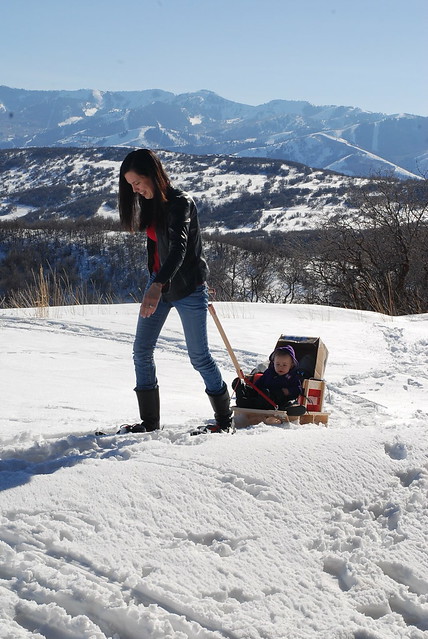
We went to Park City with our friend Dave. He took these beautiful photos of Bertrand taking Victoria on her 1st sled ride and Victoria skiing. For giggles, we put Victoria on skis, but the joke was on us. She did GREAT! At only 10 months-old she's a better skier than her mama! :)

DSC_0014
DSC_0017
DSC_0024
DSC_0030
DSC_0032
DSC_0036
DSC_0039
DSC_0048
FYI - The cardboard box in the rear of the sled is Bertrand. :) The box protects his eyes from the wind and sun, as well as helps to keep him upright.

March 3, 2012

TAOS Evaluation

A 5 year-old girl named Karlee in her TAOS. Image from here.

Last Wednesday, Bertrand was evaluated and measured for a TAOS (Therapeutic Ambulatory Orthotic System). It is a combination of an orthosis and a mobility base. We'd seen mention of TAOS online in the blogosphere for a number of years, but seeing it in person at the Abilities Expo really impressed us.

The orthosis ensures the child's legs and torso are kept in proper alignment and the mobility base supports the child in a standing (or sitting) position. With Bertrand's right hip 60% subluxed, proper alignment is important. But, it is almost impossible to maintain in his current stander. The TAOS seems like a great solution.

There is only one orthotic provider in Utah currently set-up to fit the TAOS. Fortunately, the office is only 25 minutes from our house. The evaluation primarily tested his weight-bearing, stepping reflex, and tone. The measurements were then taken when Bertrand was determined to be a good candidate for the system. I am waiting to hear back from their financial department this week so the order can be placed.

March 2, 2012

Occupational Therapy - Wrist Splint


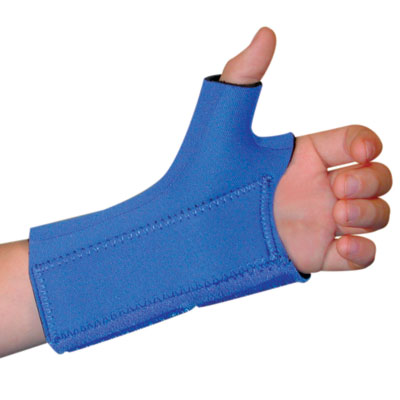
Bertrand's new wrist splint by Benik


Bertrand, Miss V (his home OT), and I went up to Shriners this morning to consult with their occupational therapist, Roxanne. Bertrand slept through the entire appointment while Miss V and I peppered her with questions. Three main items came from today's meeting.
  1. Wrist splint - Bertrand received a trial wrist splint for his right hand to help him use his thumb and have an easier time using his fingers overall. So far, it has been very effective!
  2. Weighted vest - Bertrand will try a weighted/compression vest to help with his trunk ataxia. If we see good results with it, then we will consider TheraTogs.
  3. Toilet training - Bertrand will take the first steps to prepare him for potty training! We will start tracking his elimination and developing a vocabulary (I ordered the Potty Time DVD for him) to communicate the concepts to him. It's very premature, but I bought him Disney/Pixar Cars boy briefs today just so we could talk about them. :) It may be a year or longer before we even try to seat him on the potty, but he will get a shot! ;)
We will see Roxanne again in a month to discuss Bertrand's progress and next steps, as well as covering the items we didn't get to today such as feeding (spoons, straws, etc.).

March 1, 2012

Article in "The Daily Chronicle"

N-Rare-disease-IMG_8129
Tyson Gibb | The Daily Utah Chronicle

Bertrand Might, a 4-year-old with a rare genetic disease, plays with a toy that reads the alphabet out loud when spun. Ensign Elementary, where he attends special education preschool, held a “Wear Jeans for Genes” event to raise funds for The Eccles Institute of Human Genetics.

by: Tyson Gibb on March 1, 2012

Bertrand Might is a 4-year-old in Salt Lake City who has a genetic disease with no name. He is the only child in the medical literature diagnosed with his unique genetic mutations, said his mother, Cristina Might. He has white matter involvement, a movement disorder, a multifocal seizure disorder and ongoing liver damage.

“For Bertrand, it’s a daily battle,” said Connie Cantrell, a speech and language pathologist for special education preschool at Ensign Elementary School. “There are times where breathing is the most important thing. He’s working on learning to walk — he’s working on learning everything that we take for granted. Everything that people do on a daily basis, for him, is work. Eating for him is a challenge.”

Wednesday, on the rarest day of the year — leap day — the school held “Wear Jeans for Genes,” an event that recognized rare diseases and raised funds for the U’s Eccles Institute of Human Genetics’ new genome-sequencing facility. Students at the school wore denim jeans and presented Bertrand Might with a paper chain with loving messages on each link.

The support of others is incredibly important, Cristina Might said, because the disease and constant hospitalization can be an alienating experience for her son.

“But he’s more than the sum of his parts,” Cristina Might said. “At the end of the day, he’s a kid like any other.”

He has been through a lot in four years, she said, estimating that by age 2 he had racked up more than $100,000 of medical expenses just for genetic testing. “Bertrand has had a liver biopsy, a skin biopsy, muscle biopsy, and, by age 3, most of his veins in his body had scarred over, and physicians had resorted to drawing blood from his head because they had drawn so much blood trying to test,” she said.

With a new genetic sequencer at the U, this painful series of tests could be reduced to a single blood draw, she said. “We would get the results a lot sooner than four years of agony and waiting and not knowing,” Cristina Might said.

Utah is renowned for its work in genealogy, which has helped drive students into the field of genetic sequencing. The human genetics institute is a leading institution in researching the human genome and various mutations that might be transmitted to children through their parents.

The research the institution does on any child can translate into treatments for many unrelated diseases, and every genome that is sequenced helps future specialists categorize and compare genetic information.

“Even though it might help this one disease, it might also help other cases that have this enzyme problem, maybe Alzheimer’s or Parkinson’s or things that are more widespread,” Cristina Might said.

As computational power grows exponentially, geneticists are able to sequence genomes cheaper, faster and more accurately.

Cantrell indirectly benefited from research done on immune systems during the AIDS boom of the ’90s, when genetic sequencing took significantly longer.

Her son has Wiskott-Aldrich syndrome, a rare genetic disease that is passed through the X chromosome. “I was lucky in that when my son was diagnosed, his syndrome had been isolated six months prior to diagnosis,” Cantrell said.

She stressed the importance of spreading information about rare diseases.

“You’ve got to have someone interested in doing genetics research and doing the studies in order to finance it,” she said. “So the more information you can spread, it might spark interest in somebody. A med student may go, ‘Hey, that’s what I want to look into.’ ”

One in 10 Americans, like Bertrand Might, suffer from a disease that affects fewer than 200,000 people in the United States, according to the National Organization of Rare Diseases. Innovations in genetics research can help bring researchers a step closer to more efficient treatment for him and others suffering from rare diseases.