Showing posts with label movement disorder. Show all posts

November 26, 2012

The 1st World Conference on Congenital Disorders of Glycosylation for Families and Professionals

Where: Barcelona, Spain
When: on 1 September 2013
Website: http://www.iciem2013.com/

The 1st World Conference on Congenital Disorders of Glycosylation for Families and Professionals as a part of the programme of the 12th International Congress of Inborn Errors of Metabolism.

The 1st World Conference on Congenital Disorders of Glycosylation for Families and Professionals will bring together the healthcare professionals who study the scientific and medical aspects of this growing family of diseases, and the patients with their families. “This conference is particularly important” said Vanessa Ferreira, sister to an affected patient. “Advances in technology are going to have a profound impact on the CDG field, causing a rapid growth of our knowledge on the types of CDG and on the variability of their clinical spectrum”.

The conference will cover topics relevant to a better understanding of these rare diseases by the affected families. There will be state-of-the-art presentations on clinical care, on biochemical and genetic diagnosis of CDG, on therapeutic approaches, on animal models and on current supportive therapies.

Several leading healthcare professionals will participate. Professor Jaak Jaeken, will deliver a keynote speech about the main aspects of CDG knowledge acquired in the past, with messages for the future.

This unique conference promises to motivate, educate and promote sharing and participation, built on the success of previous conferences organized by the Portuguese Association for CDG and other rare Metabolic Diseases (APCDG-DMR).

“The 1st World Conference on Congenital Disorders of Glycosylation for Families and Professionals: a booming story of sugar trees” “aims to share experience and to unite families from different regions and countries. In addition, this conference will be the first in which several CDG patient representatives and professionals from all over the world will be involved in the organization and coordination of the conference”. said Vanessa Ferreira.

The organization encourages experts on metabolic diseases to attend, especially those that have families affected by CDG. There are oral communications on 6 themes, designed to foster reflection and discussion amongst CDG families and professionals.

************************

We're very excited!  Hopefully, at least Matthew and I will be able to attend this conference!

May 31, 2012

Complications from Depakote

The likely culprit for Bertrand's recent hospitalization was depakote.  This has been the most effective seizure medication for him to date, but it has many nasty side-effects.  We were aware of many side-effects, including liver damage, and were monitoring him for symptoms.  Now we have to watch for a few more: hyponatremia (low sodium) and bone marrow suppression.

Bertrand caught a typical virus.  (He goes to preschool, therapy, dance, playgroup... he could've caught a bug anywhere.)  And then entered a vicious cycle, due to undiagnosed hyponatremia and bone marrow suppression.  The hyponatremia alone could've killed him.  Normal values are 135 mEq/L.  He was at 4 mEq/L.  The bone marrow suppression resulted in low counts for all blood cell types--white, red, and platelet.  To fight an infection, you need plenty of all of the above.

We are incredibly lucky that Bertrand got sick exactly when, where, and how he did.  He was already in the hospital (for a different procedure), with the A-Team for doctors.  They acted fast, and he is now on the mend.  Bertrand sure knows how to keep things interesting!


A few more items learned from this week:

The targeted dosing greatly changed Bertrand's nighttime EEG!  He is no longer in status epilepticus at night, which means the valium protocol is no longer right for him.

The looping episodes, of which multiple were caught on EEG, are NOT seizure activity.  In fact, Bertrand's EEG is almost normal at those times.  These are periods of alertness and a manifestation of his movement disorder.

Once Bertrand is well, we will conduct another sleep study to see if apnea is waking him at night, thereby triggering those looping episodes.

We will also see about lowering/eliminating Depakote, and/or we may continue to tweak his medication dosing to target the night seizures better.  As a substitute for Depakote, Bertrand may try Clobazam.


Next Monday, Bertrand has appointments with his pediatrician and his metabolic doctor to follow-up.  He'll be getting labs drawn then too.

To be on the safe side, I've ordered some salt tablets for him.  Each pill contains: 215 mg sodium, 63 mg potassium, 11 mg magnesium, 22 mg calcium, 100IU Vitamin D.  Bertrand can take 1,200mg of sodium per day, so depending on what he has to eat on any given day, he may get 1 or several.

Paranoid much? me?!  Nah.

March 2, 2012

Occupational Therapy - Wrist Splint


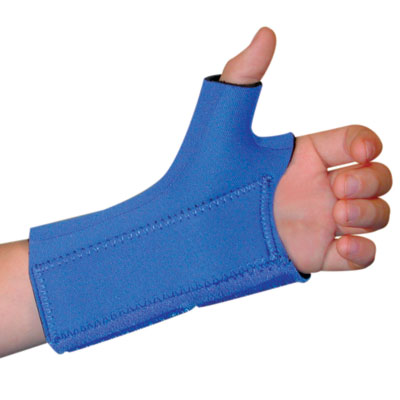
Bertrand's new wrist splint by Benik


Bertrand, Miss V (his home OT), and I went up to Shriners this morning to consult with their occupational therapist, Roxanne. Bertrand slept through the entire appointment while Miss V and I peppered her with questions. Three main items came from today's meeting.
  1. Wrist splint - Bertrand received a trial wrist splint for his right hand to help him use his thumb and have an easier time using his fingers overall. So far, it has been very effective!
  2. Weighted vest - Bertrand will try a weighted/compression vest to help with his trunk ataxia. If we see good results with it, then we will consider TheraTogs.
  3. Toilet training - Bertrand will take the first steps to prepare him for potty training! We will start tracking his elimination and developing a vocabulary (I ordered the Potty Time DVD for him) to communicate the concepts to him. It's very premature, but I bought him Disney/Pixar Cars boy briefs today just so we could talk about them. :) It may be a year or longer before we even try to seat him on the potty, but he will get a shot! ;)
We will see Roxanne again in a month to discuss Bertrand's progress and next steps, as well as covering the items we didn't get to today such as feeding (spoons, straws, etc.).

August 30, 2011

My "Ph.D.": A diagnosis for Bertrand

Today, Bertrand saw a corneal specialist for his eyes. Followers of this blog know of Bertrand's protracted battle against corneal erosion and his alacrima (lack of tears) since birth.

The two ophthalmologists who saw Bertrand today, noted the scar on his right cornea but, other than that, found no evidence of corneal erosion. Bertrand did NOT have dry eyes.

Furthermore, at home, Bertrand has been crying tears. This is especially remarkable because Bertrand still had severe xerophthalmia (dry eyes) just four short days ago.

This was the second successful test of what I am calling "my thesis". If every parent claims to be the expert in their child, I am attempting to get my PhD in Bertrand Might.
MY THESIS:
Liver damage, resulting in vitamin B12 & vitamin A deficiency, induced developmental delays, neuropathy, seizures, and alacrima.
Now, please let me explain.

I believe that Bertrand was born with liver damage because the jaundice Bertrand had at birth was not severe, but he could not shake it on his own. He had so much difficulty that he was hospitalized in the NICU. Bilirubin, the cellular byproduct that causes jaundice, is usually processed by the liver.

This liver damage could be the result of an unknown genetic disorder or the result of an infection.

While I took the best of prenatal care with Bertrand (vitamins, diet, doctors appointments, etc.), I caught "colds" twice: once in the 1st trimester and once in the 3rd trimester. I was pretty miserable.

Bacterial and viral infections can cause liver damage. Obviously, the most well-known of the viral ones are called Hepatitis A, B and C, but Mononucleosis (commonly referred to as "mono") can cause liver damage as well, and there are others.

Such an infection could have damaged Bertrand's liver prenatally and possibly my own.

(This is a big assumption, but it can in part be tested by checking Bertrand for antibodies of liver damaging viruses & bacteria. Since he hasn't had such an illness in his life, the presence of such antibodies would have come from in utero.)

The liver is where vitamins A, B12 and D are stored. It holds approximately a 3 year supply of each. If this supply is damaged, one is reliant solely on diet. Bertrand's diet for the first 5 months was breast milk. I wager that my milk was low on these vitamins, and the amount of these vitamins found in formula just were not sufficient given any pre-existing liver damage.

And here is where things get a little perverse. Certain medications block the absorption of vitamins B12 and A: proton pump inhibitors and H2 receptor antagonists. These are the antacids also known as prevacid and zantac.

What was Bertrand's very first medication? You guessed it. Zantac, followed by Prevacid. (In hindsight, this is also around when his seizures started. Coincidence?)

Based on this, could Bertrand be vitamin B12 and vitamin A deficient?

What are signs of severe vitamin B12 deficiency?
  • Neuropathy
  • Movement disorder (chorea, twitching)
  • Seizures
  • Macrocytic anaemia
Obviously, Bertrand has these. Multiple nerve conduction studies, EMGs, EEGs and MRIs serve as evidence.

B12 is a primary component of the myelin sheath found on all nerves.

Do you remember the MRI which I posted a few days ago? That was a case of B12 deficiency and it closely resembled Bertrand's MRI.

B12 deficiency is almost always associated with malnutrition. It is not a first world disease. So, hematologically, it is associated with macrocytic anaemia, which can include folate, B6 and iron deficiency as well.

However, Bertrand's case is NOT one of malnutrition. Bertrand has plenty of the vitamins which don't require liver storage.

What does B12, and only B12, deficiency look like in the blood? It looks like really fat red blood cells (macrocytosis) and/or excess platelets (thrombocytosis), for unknown reasons.

Yup, at his last blood draw, Bertrand had elevated MCH and MCV (measures of macrocytosis). And early on, he had elevated platelets.

What are signs of severe vitamin A deficiency?
  • Nyctalopia - night blindness
  • Xerophthalmia - dry eyes
  • Follicular hyperkeratosis - a kind of bumpy skin
I don't know about Bertrand's night vision, but he definitely had xerophthalmia and follicular hyperkeratosis.

I say "had" because by this point, you can probably guess that we began vitamin B12 supplementation 2 weeks ago and vitamin A supplementation 4 days ago.

With vitamin B12, he became more vocal and alert within hours. By day 3 his myoclonic seizures (jerks) stopped. By day 6, his night seizures stopped. By day 7, he was walking in his gait trainer. By day 11, we lowered his seizure medication and we have seen no seizures.

Back to today's ophthalmology appointment, that was the first test of the success of vitamin A. We could tell that his eyes (& skin) had improved some within about 24 hours, but we've proceeded cautiously with the dose. Unlike B12 which is water-soluble, Vitamin A is fat-soluble and can be toxic. We're being cautious not to overdose.

According to the medical literature, in cases of vitamin B12 deficiency, symptoms can be completely reversed--if caught early. EEGs normalize after about 5 weeks and there are MRI changes by 10 weeks.

Unfortunately, Bertrand's case, if it is one of vitamin B12 and A deficiency, was NOT caught early. We should assume that there will be permanent brain and nerve damage.

But that hasn't stopped me from shooting him up with omega-3 fatty acids for myelin sheath repair or researching intensive therapy options. As with most "scientists" (if I dare call myself such), optimism comprises my core. ;)

SO...

The way I see it, my "thesis proposal" is this Thursday, with Bertrand's neurologist. Then I get a few months to test and, in essence, watch "my dissertation" develop. And at some point, an EEG and MRI should serve as my defense!

And, better than any sheepskin diploma, I will get a healthy, happy son!

August 20, 2011

Crying Tears.


Bertrand is crying real tears. The only change in his daily regimen has been the addition of a B-12 supplement.

We are using a transdermal B12 patch and oral B12 supplement.

Of course, I've been on a research binge for the past few days. Here are some bits and pieces floating through my head...
  • B12 is stored in the liver. (Bertrand has liver damage.)
  • B12 is water soluble. (An overdose on B12 is near impossible.)
  • B12 is expressed in bile.
  • Actigall (ursodiol) is a bile acid. (Bertrand's liver has improved on actigall.)
  • B12 deficiency in infants causes movement disorder & developmental delay...
When Bertrand was a baby, we'd thought for certain that he was a case of B12 deficiency. His neurologists shot this theory down because of the important fact that Bertrand was/is not anemic. Folate can mask B12 deficiency, but he should still show some signs of anemia.

But this image is haunting me:

The MRI above is from THIS article, entitled "Involuntary Movements and Magnetic Resonance Imaging Findings in Infantile Cobalamine (Vitamine B12) Deficiency", published in PEDIATRICS: Official Journal of the American Academy of Pediatrics back in 2003.

Does "bilateral periventricular symmetric high-signal lesions in the white matter on T2-weighted images" sound familiar?

You can bet this will be discussed with Bertrand's pediatrician on Tuesday!

January 19, 2011

The Path to Assistive Technology

The Judy Ann Buffmire Rehabilitation Service Center

Bertrand's speech therapist through the Pingree Center for Autism set up a meeting at the Utah Center for Assistive Technology (UCAT) with a technology specialist there, his wonderful teacher from Pingree and his new speech therapist from his new special ed preschool. This meeting helped us lay the ground work for his assistive technology evaluation with the regional Utah Augmentative Alternative Assistive Communication and Technology (UAAACT) Team. UAAACT is a project of the Utah State Office of Education and the Utah State Office of Rehabilitation / Utah Center for Assistive Technology dedicated to improving the communication skills of students with disabilities across the state of Utah.

Matthew and I went into the meeting looking to get ideas on how to make the most out of Bertrand's iPad. We expected to get the names of appropriate apps and test drive them--which we did. But, some of the most useful information from the meeting came in the form of brain storming ways to gauge the effects of Bertrand's motor issues/movement disorder versus the effects of his cognitive abilities. And, how to capitalize on some of Bertrand's motor strengths such as spinning objects with his hands and his ability to stare pointedly at items. Bottomline, before even delving into the iPad, there are a lot of old school analog techniques which are very concrete that may set Bertrand up for immediate success.

For example, using actual objects to choose from, as opposed to using drawings or even photos of the objects in an iPad app, would be a great way to start systemetizing his communication. We do this already when having him choose between books or toys but, as one of the speech therapists pointed out, an even better test is the choice between a bottle/food and something uninteresting, like a gardening glove. This way we know the choice is actually his and not ours.

So both Daddy and Mama came away with homework from this meeting. (Daddy can have fun writing up his plans in an independent post when he isn't so swamped with work.) I am going to start off with buying a bunch of plain-colored, plastic placemats and putting a line of electrical tape down the center of each. Bertrand's will have one of these new "choosing mats" for his wheelchair, highchair, both schools, and one on every floor of our house. We'll start using the mats to present tests, choices, dichotomies... first using objects and then maybe photos, and get to know what Bertrand thinks. Give him a voice--some power. That alone could make for a much happier young man!

January 10, 2011

Cleveland Clinic Wrap-Up

Bertrand coming out of general anesthesia, post-MRI.

Bertrand was transferred from the Pediatric Intensive Care Unit Thursday afternoon and discharged from the Pediatric Epilepsy Monitoring Unit late that night. He is fully recovered from his urinary tract infection and almost fully recovered from his hectic 4-day hospital stay. (A restful sleep in a comfortable bed can do wonders!)

As expected, we came away with no answers, diagnosis or prognosis, BUT a treatment plan has been put into place! While in some ways we learned little from our time at Cleveland Clinic, in many ways we learned a LOT--starting with the importance of proper EEGs, serum medication level monitoring, medical team communication and attention to detail.

Bertrand was asked to return for follow-up in 6-12 months. We'll aim for sometime between August and October at the latest. (Can you tell we've been scarred by all the winter flight delays, cancellations, and reroutings?! Matthew, who was supposed to arrive early yesterday evening, is currently stuck in Phoenix!)

THE RESULTS
Bertrand was seen by experts in epilepsy, neurogenetic/metabolic conditions and movement disorders. He had an MRI, an MR Spectroscopy, over 3 days of EEG monitoring, and blood work.

The preliminary reading of Bertrand's MRI stated that it was unchanged from his December 2009 MRI. The myelination of his brain white matter has neither improved nor worsened.

According to the EEG, Bertrand's main seizure type is myoclonus. He has them in clusters awake and many in his sleep. Many of his atonic episodes were actually large myoclonus. His random laughter is not a gelastic seizure, but rather a reaction post-seizure because it feels good somehow.

Most of Bertrand's abnormal movements are in fact a movement disorder. They are called stereotypies: repetitive or ritualistic movement, posture, or utterance, found in people with mental retardation, autism spectrum disorders, tardive dyskinesia and stereotypic movement disorder.

A few drugs could help a little with the movements, but they wouldn't eliminate the movements entirely. The same drugs also greatly reduce seizure threshold, which is why they should be approached with caution.

Since seizures prove the greater hurdle for development and learning, over the next few months, Bertrand's current drug & diet regimen will be optimized for maximum seizure control and minimum side-effects. This means frequent blood draws to check serum medication and liver function levels.

Speaking of liver function, Bertrand's AST was 83 and ALT was 98. These values are still elevated slightly but FAR lower than the 600s at which they once were! We're not sure if this is simply part of their downward trend (like his AFP), the result of his ursodiol/actigall regimen, or the result of his stem cell infusion last August.

This makes the ideal medication for Bertrand's seizures a combination of lamictal and depakote (valproic acid), or perhaps even just lamictal or depakote. Bertrand was just raised to 100mg daily of lamictal and will need his serum levels drawn for that. We need to keep tracking his seizures.

In the meantime, we will proceed with a zonegran wean, then a keppra wean and then a ketogenic diet wean (or vice versa). All three treatments caused severe sleepiness, reflux, constipation issues, elevated heart rate, bone density loss, and possible kidney stones. He may be able to drop his prevacid (for reflux but causes bone density loss) and miralax along with these.

(I can't even begin to imagine what it would be like! 2 medications instead of 6 plus countless supplements?! Bertrand being able to eat a cupcake at his own birthday?! Without seizing?! It sounds like a pipe dream, but hey, we'll give it a whirl!)

From a testing standpoint, the neurogeneticist seemed pretty impressed with all the testing done so far. For glycogen storage diseases, Bertrand's testing to date had been for carbohydrate deficiency transferase & oligosaccharides--markers for those diseases. While these markers had come back negative repeatedly over the past 2+ years, a new genetic panel for this family of diseases had come out--all 30 can be tested quickly and cheaply--so this was sent out to be done.

Two more X-linked diseases, CDLK5 (another form of Rett Syndrome) & ARX, were put on the table, but since these will be covered by the genome sequencing being done by Duke University (results due late this month or next), these tests were held off on.

We'll stay in touch with the team at Cleveland Clinic while we implement Bertrand's seizure treatment changes. And, when we return in a few months, they'll be able to address more of the movement disorder and neuropathy/demyelenation aspects of his condition. (He'll see FOUR neurologists at Cleveland next time!)

August 13, 2010

A most unexpected talk with neurology

Monday, I went into Bertrand's neurology follow-up feeling conflicted. Bertrand has made amazing progress the past 2 months. He can stand with assistance, he can use his left arm, he can stay on hands and knees for a minute or two if placed there, he can sit without falling over, he is more social than ever, he is eating solid foods, he is making consonant sounds... but he is also seizing again.

Starting a few weeks ago, his myoclonus started making appearances throughout the day and his complex partial seizures show up toward the end of the day. I was optimistic but preparing myself to be terrified by what I saw on his latest EEG.

Unfortunately, I couldn't make heads or tails of Bertrand's EEG! Despite being slightly sleep deprived Bertrand didn't fall into his usual EEG trance. Oh, no! Bertrand was literally bouncing off the walls of his hospital bed! He was rolling back and forth, propping himself up on his forearms, talking at me (some cursing, some pleading, some flirting), trying to look at the computer monitor, playing with the blankets and the bed itself, reaching for toys... and he hadno myoclonus during the session. Of course, he had them before and after, just not during. Ugh!

A moving baby's EEG looks very different from a sleeping baby's EEG. I saw lots of crazy lines but only a handful of spikes. It killed me that I'd have to wait until speaking with Bertrand's neurologist to draw a conclusion. But, what a conclusion it was!

Bertrand's neurologist walked in and said, "if you hadn't told me this was Bertrand's EEG, I would've assumed it was a normal child with a predisposition for seizures. There is no way I would've thought this was a child with a seizure disorder!" The news got even better, as she admitted that she would've never thought Bertrand's EEG could ever look this good and that she was now a "convert" to ACTH and steroids.

However, during the session with the neurologist, even she noted Bertrand's myoclonus and "shakes". She believes that his shaking and possibly even some of the myoclonus could simply be Bertrand's movement disorder, but they look like seizures. To be safe rather than sorry, Bertrand was started on zonegran, a medication best suited for myoclonic seizures.

I have several issues with dismissing his abnormal movements as a movement disorder:
  1. Those abnormal movements disappeared on the ketogenic diet, a treatment for epilepsy.
  2. Those abnormal movements are frequently followed by disorientation, confusion or staring, which are indicative of seizure activity rather than movement disorder.
  3. Occam's Razor: "entities must not be multiplied beyond necessity" (entia non sunt multiplicanda praeter necessitatem). When competing hypotheses are equal in other respects, the principle recommends selection of the hypothesis that introduces the fewest assumptions and postulates the fewest entities while still sufficiently answering the question. This means, why assume a child has both a seizure and a movement disorder if just a seizure disorder could sufficiently describe his condition? I am starting to believe that Bertrand just had epilepsy from the get-go and, because some of his seizures (shakes, jerks, and automatisms) resemble movement disorders, we were led on a wild goose chase.
While at the doctor's appointment, we discussed the possibility of restarting the ketogenic diet, but the consensus was that if Bertrand's seizures could be effectively treated by adding one other medication (zonegran), with minimal side-effects, that would be best. The ketogenic diet combined with the steroids and Bertrand's lack of sufficient weight-bearing poses a very serious risk to his already weak bones. (Last February's broken arm set Bertrand back bymonths developmentally AND made him miserable.)

Unfortunately, the rest of this week has gone horribly for Bertrand. In spite of starting the zonegran on Monday, Bertrand shakes and myoclonus have gotten increasingly frequent and violent. His social awareness is slipping and his irritability/fogginess is rolling back in. Matthew and I are already mourning the loss of our son's personality. Granted Bertrand still has 5 more weeks to achieve an effective level on zonegran in his blood stream, but at the rate his seizure control is slipping, that is 5 weeks too many.

Today, I called the nurse practitioner in-charge of the ketogenic diet at Primary Children's Medical Center to see how soon we could go back on the diet. The ketogenic diet worked immediately by eliminating Bertrand's atonic seizures and reducing his myoclonus to at most one per day. But Bertrand can't restart the diet for another 2 months at the earliest.

I want to be happy about what Bertrand has achieved so far, but I am devastated. Bertrand is already slipping away and the next stage of the prednisolone wean is supposed to start Monday. How can I avoid losing my baby? Do we start the modified atkins diet, doctors be damned? Do we wait to continue the prenisolone wean? Do we increase or reduce one of his medications (keppra, zonegran)? You should never change multiple variables at once but the temptation is almost impossible to resist when your child's welfare is at stake.

June 11, 2009

Positive Thinking

I'm back and I apologize to everyone who reads this blog regularly for having been remiss in my reporting duties! I got burnt-out a few weeks ago. The "not knowing" finally took its toll on me. So, I took a break from being Bertrand's executive assistant and focused on being his mommy. I enjoyed time with Bertrand, friends and family. I threw myself into planning an 18 month birthday party for Bertrand and did what, in my mind, constituted "normal" mommy things.

Coming out of this funk has left me with a mantra (a modified serenity prayer). "Have the serenity to accept the things you can't change. Have the courage to change the things you can. Have the wisdom to know the difference. And, take a deep breath." :) It works for me.

Bertrand had his neurology check-up yesterday and his 18 month well baby check-up today. Both of his doctors were AMAZED at how well he is doing. His neurologist even went so far to say he could be walking by age three to five, *and* she thinks we'll get to see him grow-up. :') I was emotional on the car ride back. So many parents take it for granted that they'll see their child grow up, but for me--hearing that it is now a possibility--I still tear up. I always will.

Bertrand is beautiful and healthy looking. His weight is down to 50th percentile (yay!) and his height is still 50th percentile--so he is finally proportional. :) He was prescribed a once a day dose of valium to be taken before therapy and a new, stronger acid reflux medication. His liver functions will be drawn again tomorrow to see if his weight loss has improved them.

Bertrand still can't get to sitting on his own. He can't stand on his own. He can't hold his bottle or feed himself or crawl. But, cognitively Bertrand is fine! He loves to read... and boss me around. His personality is very strong. He is serious, stubborn, manipulative, arrogant (I never knew one could consider a baby arrogant until him) and often times charming. His displays shock his doctors--and amuse me. :) His therapists frequently don't know what to make of him.

None of his doctors know what is causing Bertrand's movement disorder and neuropathy. They are still very confused. The next MRI in October will tell us a lot. A liver biopsy in July is looking very likely. What's not looking likely is a diagnosis. Matthew and I are prepared to never get one. As long as Bertrand stays happy, healthy and mentally okay, we can make do with that. :)

April 14, 2009

Skin Biopsy, Pharmacy, Lab Work & More

Bertrand saw Dr. Longo this morning for a skin biopsy. After applying local anesthesia to the area, Dr. Longo took a pencil eraser sized chunk out of Bertrand's right buttock. Bertrand slept through the actual biopsy portion. This is of course after he pooped on the table and proceeded to pee all over Dr. Longo's nice white lab coat. That about covers what Bertrand thought of the entire experience. ;)

After that Bertrand and I went on the great seizure medication quest. Two more pharmacies and still no meds. His prescription calls for a non-standard dosage because he is small. This has caused me grief. Finally, the University of Utah hospital pharmacy said they could make them... by Thursday. It's a good thing Bertrand doesn't actually need them yet!

After that we were off to the outpatient lab. And, yes. My son, he has the stigmata. They had to poke 4 times (both hands and both arms, no feet this time) to get all the blood they needed. We got two of our favorite lab techs (Joel and Renee) since it takes three people to hold Bertrand down. As tough as it was, we managed to get a lot of smiles from Bertrand--and draw the blood.

The labs (many are repeats) and expected turnaround times are as follows:
  1. Copper: 1 week
  2. Ceruloplasmin: 1 week
  3. CLN1 & CLN2: 1 week
  4. ACTH*: 1 week
  5. GM1 (Seattle): 7-10 days
  6. Arylsulfate (Seattle): 2 weeks
  7. Purine Panel (Baylor): 7 days
The skin biopsy will be cultured for 2-3 weeks at the ARUP lab before being sent to the University of Alabama. From then it'll take an additional 2-3 weeks to run the tests.

*Adrenocorticotropic hormone (ACTH or corticotropin) is a test I requested.

Last Saturday Bertrand rolled off the bed, got hurt and cut his lip. He was screaming so loud and hard that his face was blue, but there were still NO TEARS. I finally had enough and spent a day researching that condition; it's called alacrima. It ranges from no tears to blistered corneas and can be caused by very few things, one of which is called Allgrove syndrome.

Allgrove is another VERY rare genetic condition. It is also called Triple A Syndrome because it is characterized by Alacrima, Achalasia (difficulty swallowing) and Adrenal deficiency. We know Bertrand has difficulty swallowing and choking--his swallow study is next Tuesday. The ACTH would measure the adrenal (un)responsiveness, which is why I want the result.

People with Allgrove can have ataxia, movement disorder, neuropathy, optic nerve atrophy, developmental delay, abnormal EEG, small head for height... all of which Bertrand has. About the only thing he doesn't have is failure to thrive--his "problem" with a lot of tentative diagnoses. :) Most interestingly, it disproportionally affects Puerto Ricans! This is the first disease for which we have a known genetic basis.

Treatment for Allgrove would be relatively simple: a steroid like prednisone. (And of course extensive therapy to try to work around the damage which has already occured.) However, it is worth keeping in mind that alpha-fetoprotein, ALT, AST, and oligosaccharides should all be normal for Allgrove. These are all elevated in Bertrand. Regardless, I am fostering that evil little emotion called hope again. :)

January 11, 2009

Overcoming Movement Disorder

Before I continue with the "Operation Diagnose Bertrand" from my last post, I'd like to discuss the blog's title change. We changed the name from "The Chronicles of Bertrand" to "Overcoming Movement Disorder" for several reasons--the first of which is that I am inherently optimistic that we WILL find a way to successfully overcome Bertrand's movement disorder.

The other significant reason for the title change relates to reaching out to and helping other parents to children with movement disorders. As I continue pouring what I've learned from Bertrand's case into this blog, hopefully it will become resource and relief for other worried parents. It was, and continues to be, difficult feeling so alone... so un-googleable.

It has become my personal mission in life to make search terms like "jiggly baby" result in at least some medically helpful information in addition to all the annoying youtube videos. When you don't know the medical terms Chorea or Ataxia (in my opinion, fancy words for varying degrees of jiggly) how else are you supposed to find information about your child? And, what to ask your doctor?

UPDATE: I called the laboratory when it first opened today. It is now arranged for Bertrand to get his blood drawn tomorrow during the process of sedation--while they are inserting the IV. We try to minimize the number of times he gets pricked since it is not his favorite thing.